

With barely a fall crisp in the air, it may seem odd to be thinking about winter holidays months away. But with up to 30% of sales occurring in the holiday season, it’s not an opportunity to take lightly. Effective holiday marketing requires months of planning, and you can begin now with these tactics.
- Check the speed of your website. Slow loading pages frustrate customers, and can result in a loss of a sale. Plug your url into https://developers.google.com/speed/pagespeed/insights/ to see your speed, and how you can improve it.
 Ensure your website is mobile friendly. Busy shoppers purchase on their phone. A difficult to use app will lose you customers faster than people lose their diet resolutions at the company holiday party. Plug your url into https://www.google.com/webmasters/tools/mobile-friendly/ to gauge its mobile friendliness.
- See what worked previously. Go over marketing and sales data from previous holiday campaigns. Identify what resonated with your audience, what marketing channels saw the highest ROI, etc. There’s no need to reinvent the wheel; you can build on your previous success and learn from previous mistakes.
- Make a creative holiday campaign. You want your company to be remembered by frazzled shoppers as they dart around the city searching for gifts. A memorable campaign can keep you on their minds, and get you on their shopping destinations list. Check out these holiday marketing campaigns (http://blog.hubspot.com/marketing/holiday-marketing-campaign-examples#sm.00007s6law3dnda8x8c1f2gas6ea9 ) for creative inspiration.
 Pick a season’s greetings. Some audiences are offended with the use of “Merry Christmas” while others are equally offended by the lack of “Merry Christmas.” Know which greetings best suit your brand and your target audience. “Happy Holidays” is a safe bet since it recognizes the numerous celebrations.
- Create holiday specific designs. Your holiday marketing strategy is different than your typical sales strategy, and your images should reflect that. Canva is a great free site allowing you to design stunning holiday themed graphics.
- Clearly communicate shipping and order-by dates. No one buys a present thinking “I sure hope this comes after Christmas!” Clearly communicate on your site when customers need to order by for guaranteed arrival by Christmas.
- Host a holiday event. A bookstore can host a holiday children’s book reading with
 Santa. An art supply store can organize a holiday card decorating workshop. Any store can throw a holiday party with a tree lighting and carol singing. Make a fun event, ideally connected to your business, to draw people to your store. They’ll be reminded of your great selection, which hopefully will get them thinking about crossing items off their shopping list with your products.
 - Design a gift catalogue. Suggest products/services for everyone on your customers list (grandma will love…what kid wouldn’t love…and so on). Sometimes a tailored suggestion is the simple push a customer needs to make the purchase. It’s an effective email marketing tactic that appears less promotional to customers.
Holiday marketing is a crucial sales strategy for small businesses. If you’d like help creating or managing a marketing campaign, Alpine Small Business Solutions is here for you! We’re ready to assist with this or any aspect of business building. Reach out with an email or phone call today.
And better yet, if you have some great ideas, make sure you comment on what has worked and hasn’t worked to share with others.
 Tripwires utilize the persuasion principle of consistency. People have a need to rationalize their behavior as consistent, whether they are aware of its impact on their decisions or not. After they agree to a small request, they become more likely to agree to a similar but larger request. They start to feel safe with your company and products. It’s why you may find yourself picking your friend up from the airport a few weeks after you agreed to pick him up for a social outing. As long as the second larger request is similar in nature to the first smaller request, it’s likely individuals will comply.
 A tripwire also needs to be low risk. It’s great if a
  Whichever way you choose the important piece is to follow up. You have a hot buyer…check in when him. Certain tripwires are set up well for an immediate pitch (while you’re buying this dog teeth cleaning, get your dog groomed and covered with flea and tick prevention at the same visit). Others work better as a follow-up (now that you’ve completed our first course, sign-up for the entire program). Find what meets your sale best.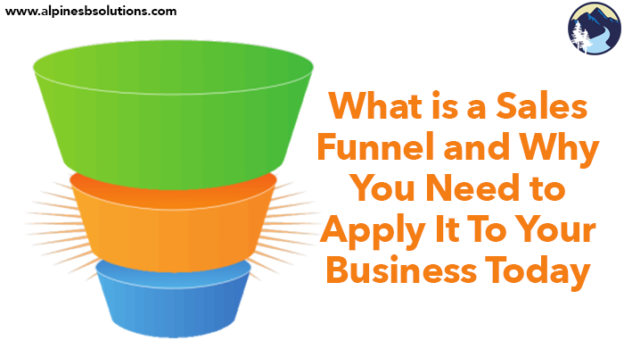
 A sales funnel is an analogy used to explain how the sales process works. It serves as a visual representation of how an individual moves from knowing nothing about your organization to becoming a loyal customer and hopefully brand evangelist for you. The mindset of a sales funnel views sales as a proactive process of making customers (as opposed to the more passive process of finding customers). The underlying goal of the sales funnel is to convert those who are unaware of your organization to happy customers by finding as many
  become a customer. In situations where contracts need to be renewed or purchases made again, the customer will enter a re-evaluation phase. In some respects, they become a prospect again since they can now evaluate their other options.
  number of individuals at each stage, the percent of customers made from leads, and the average time it takes to move a customer down the funnel. Gathering these metrics provides you with a more holistic method of comparison to gauge successful sales efforts than just sales completed. After enough time using the sales funnel, you’ll be able to see a baseline of what you can expect from your sales team. Deviations from this baseline will show you what works well or what needs to be improved in your sales strategy.
 the numbers will always be high at every phase. The reality, however, is that the numbers fluctuate often. Using a sales funnel highlights areas that should be targeted to get the numbers to where they need to be for effective customer recruitment. If you see you’re lacking leads, you can put more resources into lead generation. If you see you have enough leads but not enough are becoming prospects or committed, you can put more resources into bettering your pitch. If you see enough customers aren’t returning when contracts need to be renewed, you can put more resources into customer service.